
Swimming Pool Safety Laws and Liability for Homeowners
Owning a pool means owning a legal duty of care. Here's what the law actually expects of you, where liability comes from, and how to protect your family and your finances.
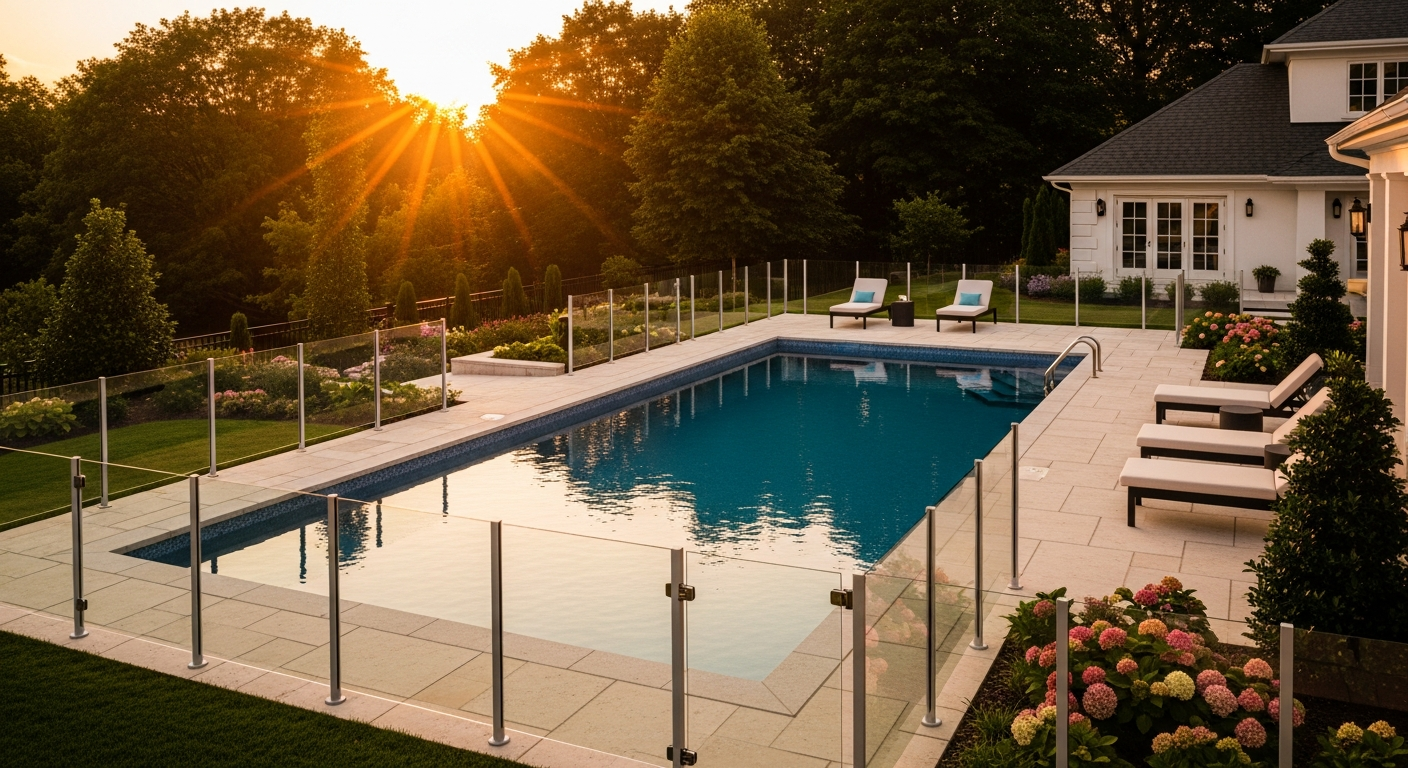
The duty you take on when you own a pool
When you own a swimming pool, the law treats you as the operator of one of the most dangerous features a private property can have. Under the premises-liability principles that apply in every U.S. state, a homeowner owes guests a duty of 'reasonable care' — a legal obligation to keep the property reasonably safe and to warn of hazards you know about. A pool is the textbook example of a known hazard.
What 'reasonable care' requires scales with the risk, and few residential features carry more risk than open water. Courts consistently expect pool owners to maintain barriers, control or restrict access, and address obvious dangers like a broken gate latch or a missing drain cover. Fall short, and an injured guest can argue you were negligent.
Laws vary significantly by state and municipality, and nothing here is legal advice — for your specific exposure, talk to your insurance agent and, if needed, an attorney. But the principles below apply broadly, and understanding them is the first step to protecting the people you love and the assets you've built.
Attractive nuisance: why a pool is different
Most premises-liability rules distinguish between invited guests and trespassers, and owners generally owe trespassers very little. Swimming pools are the great exception, through a legal doctrine called 'attractive nuisance.' Because a pool is inherently enticing to children who cannot appreciate the danger, the law holds owners to a higher standard even for uninvited kids who wander onto the property.
Under the attractive-nuisance doctrine — recognized in some form across most states — a homeowner can be liable if a child is injured by a pool the owner should have known would attract children, and the owner failed to take reasonable steps to prevent access. A neighbor's toddler slipping through an unlatched gate is precisely the scenario the doctrine was built around.
This is why 'they weren't even invited' is rarely a defense in pool cases involving young children. The practical takeaway is blunt: an unfenced or poorly secured residential pool is not just a safety failure, it is a standing legal liability every hour of every day.
Barrier and fencing laws are not optional
Nearly every jurisdiction regulates residential pool barriers through building codes, many modeled on the International Swimming Pool and Spa Code or a state adaptation of it. Requirements are specific, and 'I have a fence' is not the same as 'I comply.'
The safety case behind these rules is overwhelming. The CDC reports that four-sided isolation fencing — which separates the pool from the house and yard on all sides — can reduce a young child's risk of drowning by more than 50% compared with three-sided fencing that leaves the house wall as the fourth side.
Non-compliance cuts two ways. You can face code citations and fines, and in a lawsuit a code violation is powerful evidence of negligence — in some states a safety-code violation can establish negligence almost automatically ('negligence per se'). Pull your local pool-barrier ordinance and confirm your setup actually meets current standards; codes change, and a fence that passed inspection a decade ago may no longer qualify.
- A barrier commonly required to be at least 48 inches high with no footholds a child can climb.
- Gates that self-close and self-latch, with the latch mounted out of a small child's reach.
- No gaps or openings wide enough for a young child to squeeze through or under.
- Compliant, intact anti-entrapment drain covers as required by federal and state pool-safety rules.
What your homeowner's insurance actually covers
Standard homeowner's policies include personal-liability coverage that typically responds when a guest is injured in your pool, up to your policy limit — often somewhere between $100,000 and $500,000. That can sound like plenty until you consider that a serious drowning or brain-injury claim can climb into the millions.
Read your policy for pool-specific language. Some insurers require fencing as a condition of coverage, exclude diving boards or slides, add surcharges for pools, or decline certain features entirely. A policy that lists a safety condition you haven't met can leave you exposed at exactly the moment you need it most.
Two moves materially reduce risk. First, consider a personal umbrella policy, which stacks $1 million or more of additional liability coverage on top of your home and auto policies for a relatively modest premium — pool owners are among the clearest candidates for one. Second, document your safety measures; several insurers offer premium credits for fencing, alarms, and other precautions.
Where liability actually comes from
Liability in a pool case almost always turns on negligence: did the owner fail to exercise reasonable care, and did that failure cause the injury? Foreseeability is central — courts ask whether a reasonable owner should have anticipated the harm. A child drowning in an unfenced pool is highly foreseeable; a genuine freak accident no one could predict is not.
For invited guests, the injured person's status still matters. Social guests are owed a duty to be warned of or protected from dangers the owner knows about. In plain terms: if you host a party, you owe your guests real, active care around the water — not just a posted sign.
- No barrier, or a barrier with a defective or propped-open gate.
- Inadequate or entirely absent supervision at a gathering.
- Serving alcohol to guests who then swim, especially without dedicated water supervision.
- Broken or missing anti-entrapment drain covers.
- No basic rescue equipment on hand, or equipment locked away out of reach.
Parties, alcohol, and social-host risk
The moment you host an event, your exposure rises. More people, more distraction, and often alcohol combine into the highest-risk scenario a residential pool ever sees. The CDC reports that alcohol is involved in up to 70% of deaths associated with water recreation among adolescents and adults — a sobering figure for hosts who serve drinks poolside.
Many states also recognize some form of social-host liability, which can extend responsibility to a host who serves alcohol to a guest who is then injured, or who injures someone else. Around a pool that risk compounds: an intoxicated guest is both more likely to be hurt in the water and less able to help someone else who is.
The defensible posture is straightforward — separate alcohol from swimming, keep anyone in a supervision role completely sober, and provide dedicated, trained eyes on the water for any sizeable gathering. That last point is where a hired professional earns their fee many times over.
How hiring a professional changes the picture
Courts and insurers both reward demonstrable reasonable care, and few measures are as demonstrable as retaining a certified lifeguard for a pool event. A trained professional provides active surveillance, current CPR/AED and rescue skills, and the authority to enforce rules that guests ignore when they come from a host — and their presence is concrete evidence that you took safety seriously.
A professional also changes the practical dynamic on the day. Instead of assuming another adult is watching — the exact assumption that produces tragedies — you have one person whose only job is the water, distracted by nothing. For estates and repeat hosts, that is the difference between hoping nothing happens and actively managing the risk.
Verification matters as much as the hire. On Guardly, every professional's lifesaving certification, CPR/AED credential, and government ID are verified before they can accept a booking, so the person guarding your family's water is exactly who they claim to be. That documented, verifiable record — who you hired, what they were certified in, when they arrived — is precisely what protects a homeowner if anyone ever asks whether you exercised reasonable care.
A homeowner's pre-summer liability checklist
Run this list before the first swim of the season, and again before any event:
- Confirm a compliant four-sided barrier with a self-closing, self-latching gate and a latch out of children's reach.
- Pull your local pool-barrier ordinance and verify current compliance — codes change over time.
- Read your homeowner's policy's pool language and confirm your liability limit and any conditions.
- Price a personal umbrella policy for an extra $1 million or more of coverage.
- Verify anti-entrapment drain covers are intact and compliant.
- Stage rescue equipment (a reaching pole and a throwable flotation device) in plain sight, and keep a phone poolside.
- For any party, keep alcohol away from the water and hire a certified, verified lifeguard for larger gatherings.
- Keep records: inspection dates, safety upgrades, and the verified credentials of any professional you hire.
Frequently Asked Questions
Am I liable if a neighbor's child drowns in my pool without permission?
Possibly, because of the attractive-nuisance doctrine. Pools are so enticing to children that most states hold owners to a higher standard even for uninvited kids — so an unsecured pool can create liability regardless of whether the child was invited. A compliant four-sided fence with a self-latching gate is the core defense.
Does homeowner's insurance cover a pool drowning?
Standard policies typically cover guest injuries up to your liability limit, but serious claims can exceed those limits, and some policies impose pool conditions or exclusions. Read your policy's liability section and pool endorsements, and strongly consider a personal umbrella policy for additional coverage.
Is a pool fence legally required for a private home?
In most U.S. jurisdictions, yes — residential pool barriers are mandated by local building codes, often specifying height, self-latching gates, and gap limits. Requirements vary, so check your specific municipal ordinance; a violation is not only a fine risk but strong evidence of negligence in a lawsuit.
Can hiring a lifeguard reduce my legal liability?
It doesn't erase your duty of care, but it is one of the strongest signals of 'reasonable care' a host can show. A certified, verified professional provides active supervision and emergency skills, and creates a documented record that you took safety seriously — which materially strengthens your position if a claim ever arises.
Am I responsible if a guest is drinking and gets hurt in my pool?
You can be. Many states recognize social-host liability, and alcohol is involved in a large share of adult water-recreation deaths. Keep alcohol separated from swimming, ensure anyone supervising is sober, and provide dedicated water supervision for gatherings where drinks are served.