
The Complete Pool Party Safety Checklist (From Professional Lifeguards)
We asked working lifeguards what they check before every private event. This is the exact list — from fence latches to sober-watcher rotations.
Why hosts underestimate pool parties
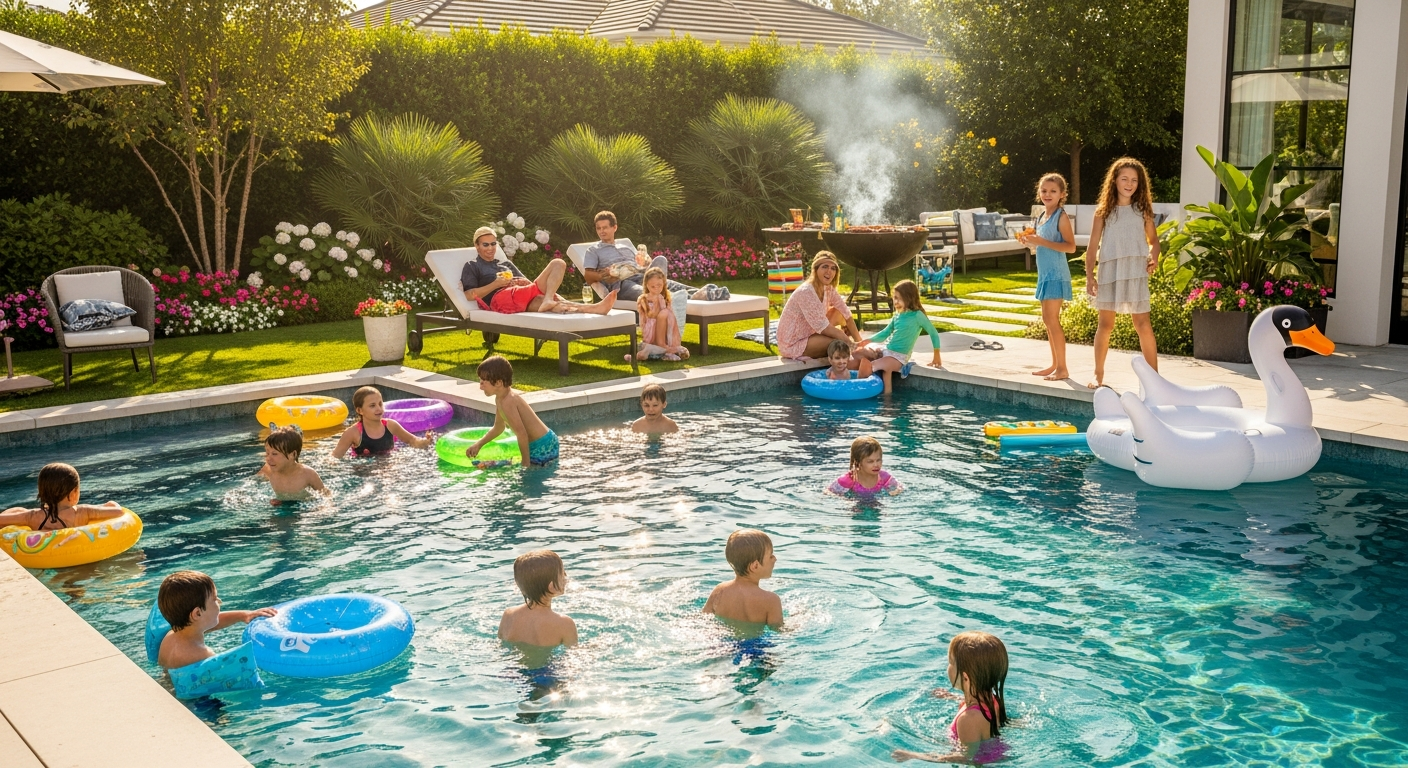
Drowning is fast, silent, and nothing like the movies. There is rarely splashing or shouting — a struggling swimmer slips under in 20 to 60 seconds. At a party, every adult assumes another adult is watching, which is exactly how gaps happen. The single most important safety decision a host makes is assigning undistracted eyes to the water at all times.
Before the party
Run this list the morning of the event:
- Walk the pool deck and remove trip hazards — hoses, toys, loose furniture near the edge.
- Check that fence gates self-close and self-latch; prop nothing open.
- Confirm the drain covers are intact and firmly attached.
- Stage rescue equipment where it's visible: a reaching pole or shepherd's crook and a throwable flotation device.
- Put a phone in a waterproof pouch at the poolside — not in the house — and know your exact address for a 911 call.
- Set clear water rules with kids before anyone gets wet: no running, no breath-holding contests, no diving in the shallow end.
During the party
Supervision has to be structured, not assumed. Professional guards call unassigned supervision the number-one failure at private events.
- Assign a designated Water Watcher in 20–30 minute rotations — one sober adult whose only job is scanning the water. Hand them a physical object (a lanyard or wristband) so the role transfers explicitly.
- Keep weak swimmers and children under 5 within arm's reach of an adult in the water — 'touch supervision' is the standard.
- Keep alcohol away from anyone in a supervision role, and be honest with yourself about the crowd: alcohol is a factor in a large share of adult drowning deaths.
- Cap the number of swimmers to what your watchers can actually track. Beyond 15–20 guests in the water, hire a certified professional.
When to hire a professional
Hire a certified lifeguard when the guest list passes roughly 15 swimmers, when young children outnumber attentive adults, when alcohol is being served, or when the host wants to actually enjoy their own party. A professional brings trained scanning technique, rescue skills, CPR/AED certification, and — just as valuable — the authority to enforce rules that guests ignore from a host.
Verify credentials before the event: current lifesaving certification, CPR/AED, and identity. On Guardly every professional's certifications and ID are verified before they can accept a booking, and you can review their profile, verified perks, and customer ratings in the app.
After the swim
The party isn't over when the last swimmer towels off. Do a final headcount, sweep the pool and deck, lock the gate, and remove floating toys — a colorful float is an invitation for a child to return unnoticed. If anything unusual happened in the water, even a brief struggle, watch that guest closely and don't hesitate to seek medical care.
Frequently Asked Questions
What is a Water Watcher?
A designated sober adult whose only responsibility is watching swimmers, rotated every 20–30 minutes. The role transfers explicitly — never by assumption.
How many swimmers can one lifeguard supervise?
Professional settings commonly use one guard per 25 swimmers. For private parties with mixed ages, one guard per 15–20 swimmers is a safer benchmark.