
How to Become a Certified Lifeguard: Requirements, Cost, and Timeline
From the prerequisite swim test to your first paid shift — the full path to certification, what it costs, and how long each step really takes.
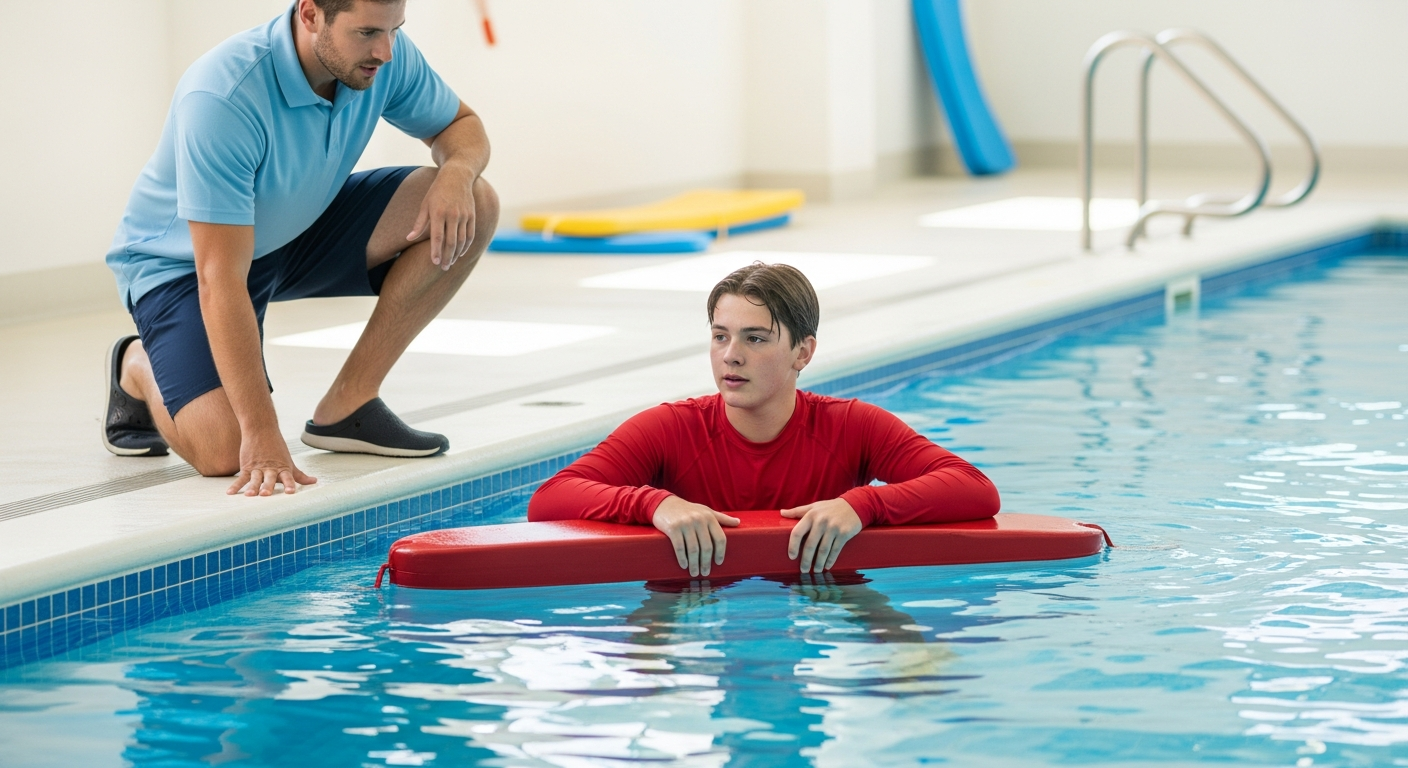
The prerequisites
Most certifying bodies (the American Red Cross is the largest) require candidates to be at least 15 years old and pass a swim test before the course begins. The standard pre-test looks like this:
- Swim 300 yards continuously using front crawl and breaststroke.
- Tread water for 2 minutes using legs only.
- Complete the timed brick retrieval: swim 20 yards, surface-dive 7–10 feet, retrieve a 10-lb brick, and return within 1 minute 40 seconds.
The course itself
A full lifeguarding course runs 25–30 hours, usually split across two or three weekends or an intensive week. Blended-learning formats put the theory online and reserve in-person time for water skills. You'll cover surveillance and scanning technique, active and passive rescues, spinal injury management, CPR/AED for adults and children, first aid, and emergency oxygen basics.
Expect to pay $200–$400 depending on region and format. Many employers and parks departments subsidize or fully reimburse the course if you commit to a season — always ask before paying out of pocket.
What certification includes — and when it expires
Passing earns you a certificate covering lifeguarding, first aid, and CPR/AED, typically valid for two years. Some states and facilities layer extra requirements on top — for example, New York's health code has specific supervision requirements, and waterfront or deep-water facilities require additional modules. Keep digital copies of everything; you will be asked for them constantly.
Recertification is shorter and cheaper than the original course, but don't let a certification lapse — an expired card means you legally cannot work, and courses fill up fast every spring.
From certified to paid
Traditional employment means a facility: community pools, water parks, gyms, summer camps. Pay is hourly, schedules are fixed, and summer demand collapses in September.
The fastest-growing alternative is private on-demand work. Platforms like Guardly let certified professionals set their own availability, accept the bookings they want, and earn significantly more per hour than facility work — private clients pay a premium for verified, vetted professionals. Onboarding requires your current certifications, a government ID, a profile photo, and tax paperwork, all verified before you can accept work. After that, earnings flow directly to your bank account after each completed shift, with tips on top.
A realistic timeline
If you can already pass the swim test: two to four weeks from signing up for a course to holding a certification, then a few days for platform verification. Candidates who need to build swim endurance first should budget an extra month of pool time. Start in March or April and you're earning by the first hot weekend of the season.
Frequently Asked Questions
How much do private lifeguards earn?
Facility guards typically earn $15–$22 per hour. Private on-demand bookings commonly pay $30–$60+ per hour depending on market, timing, and experience — plus 100% of tips.
Is the swim test hard?
The 300-yard swim is about endurance, not speed. Most comfortable swimmers pass after a few weeks of practice; the timed brick retrieval is what candidates fail most, so practice surface dives.
Do certifications transfer between states?
Nationally recognized certifications like the Red Cross's are accepted almost everywhere, but some states add their own requirements — check local health codes or ask your platform/employer.