
Drowning Prevention: The Statistics Every Pool Owner Should Know
Drowning is the leading cause of death for children ages 1–4. The data on when and how it happens should change how every pool owner thinks about supervision.
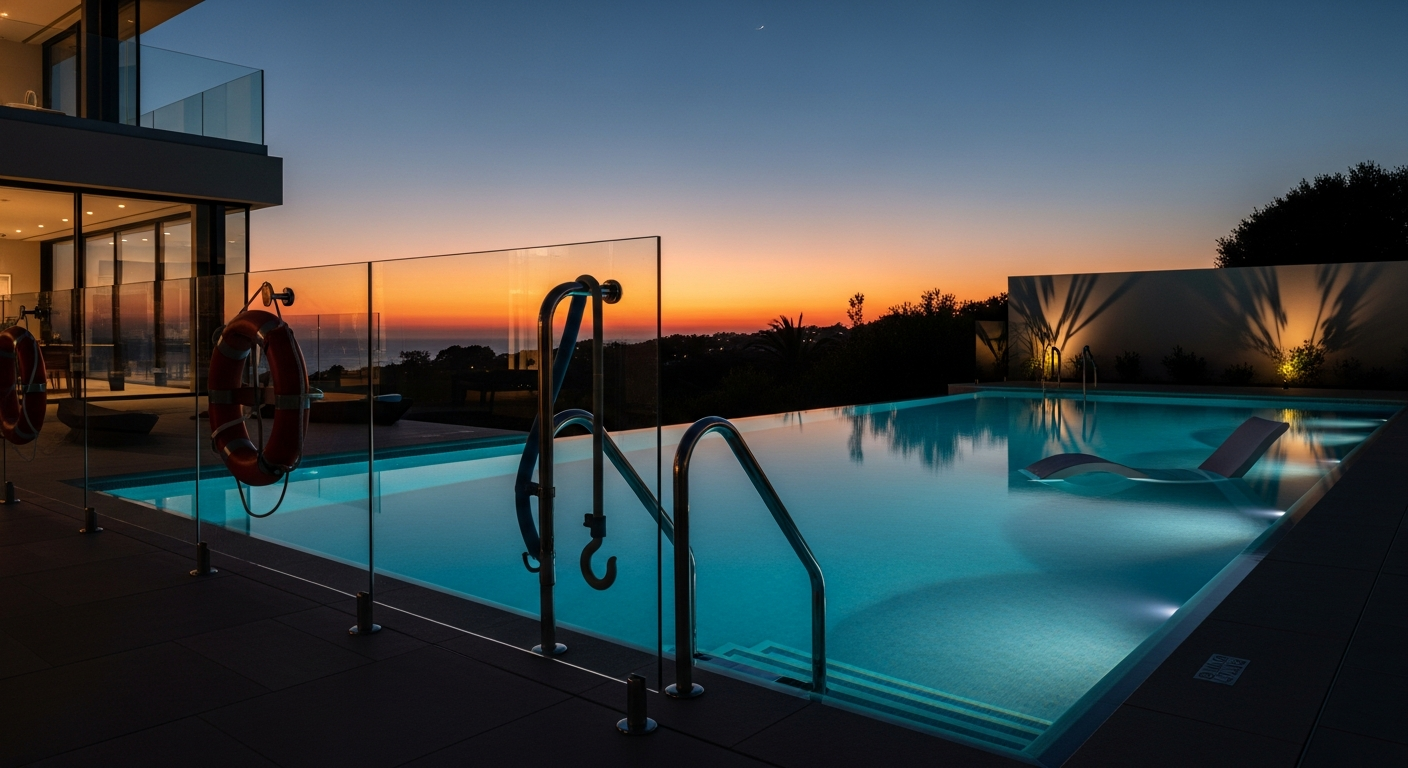
The numbers, plainly
Around 4,000 people die from unintentional drowning in the United States every year — about eleven per day — and thousands more survive drowning incidents with lasting injury. Drowning is the leading cause of death for children ages 1 to 4, and among children in that age group who drown, most drown in home swimming pools.
Two details from the data should reshape how pool owners think. First, most young children who drowned were last seen inside the house, not at the pool — they slipped out during a gap nobody registered. Second, drowning is overwhelmingly silent: the instinctive drowning response involves no waving, no yelling, and often less than 60 seconds at the surface.
Layer 1: Barriers
Four-sided isolation fencing — separating the pool from the house, not just the yard — is the single most-studied physical intervention, associated with a large reduction in young-child drowning risk compared to no fencing or three-sided setups. Gates must self-close and self-latch, and the latch must be out of a toddler's reach. A fence with a propped gate is a decoration.
Layer 2: Supervision that's assigned, not assumed
Supervision fails structurally, not morally: every adult believes someone else is watching. The fix is assignment — a named Water Watcher rotated in short shifts, or a certified professional whose only job is the water. For children under 5 and weak swimmers, the standard is touch supervision: an adult within arm's reach, in the water.
Layer 3: Swim skills
Formal swim lessons are associated with a substantial reduction in drowning risk among young children. Lessons are not drown-proofing — no child is ever 'water safe' — but skill acquisition measurably shifts outcomes, and it compounds with every other layer.
Layer 4: Emergency readiness
In a drowning, brain injury begins within minutes; bystander CPR started before EMS arrival is strongly associated with better outcomes. Every pool household should have at least one current CPR-certified adult, rescue equipment staged in sight, and a phone at the pool. Certified lifeguards train these responses until they're automatic — one more reason professional supervision changes the math at large gatherings.
Layer 5: Redundancy
No single layer is reliable, which is the entire point of layered protection: fencing for the moments supervision gaps, supervision for the moments barriers fail, CPR for the moment everything else has. Pool alarms, door alarms, and locked covers add further redundancy for the hours the pool is unattended.
The encouraging part of the data: drowning deaths among young children have declined over decades in places that adopted barrier laws and public education. Prevention works. It just has to be layered, and it has to be boringly consistent.
Frequently Asked Questions
What is 'dry drowning'? Should I worry about it?
'Dry drowning' and 'secondary drowning' aren't medical terms, and delayed deaths after a normal swim are vanishingly rare. What matters: if someone had a genuine struggle in the water — coughing fits, vomiting, unusual sleepiness — get them checked promptly.
Are pool alarms worth it?
As one layer, yes — especially door and gate alarms covering the paths to the pool. They are supplements to fencing and supervision, never substitutes.